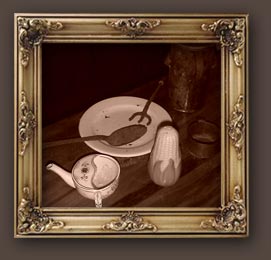
Crockery Ginger Beer Bottles
Click to Enlarge |
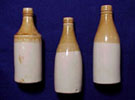
These bottles were common Civil War period crockery "ginger beer" bottles. They are often found in the trash pits near both Union and Confederate camps. Used as well to quench civilians in cities, once emptied, they were often tossed down into household privy pits. Not very much was recycled back in those times! Have just one left!
CW Period Sardine Can
Click to Enlarge |
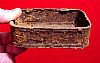
Soldiers used a lot of canned foods in both tins and jars while away at war. Tins of sardines were commonly liked. Here is one from a CW camp site on private land in area of Resaca, Georgia. Did comrads share a last supper from such a tin before falling in battle soon afterwards?
Civil War Camp Fireside Utensil Set
Click to Enlarge |
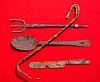
These are four (4) Utensil items dug together from a Civil War cook site near Resaca, Georgia. There is a big 11 1/2" spoon, an equally large pronged sausage fork, a metal s-shaped pot hook, and a large bladed dinner knife. A rusty but solid set which demonstrates the practical need to cook for tent mates and company members while traveling the countryside from sporadic battle to battle.
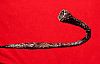
Ramrod bent for use as a pot hook
Click to Enlarge |
In the days when iron pots hung over open log fires, one needed a pot hook to suspend the kettle. Inventive troops used a bent (partial) .58 caliber musket's ramrod. This is rusted but pretty solid. From the Richmond area.
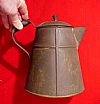
Large tin Camp Coffee Pot
Click to Enlarge |
A tin coffee pot that is large enough to supply coffee to many tent mates... Coffee was a favorite of troopers from both sides. Took off the chill and led to conversation
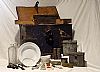
A Civil War Mess Box
Click to Enlarge |
Carried from campsite to campsite by mule-hauled wagon or train, this is a well-equipped mess box of utensils and culinary supplies. Often such kits were the property of groups of officers or NCO's who shared tents and dined together in a cordial relaxing fashion when a battle was not imminent or near at hand. Winters were a time for rest, since muddy roads and fields usually prevented winter warfare. A comfortable log cabin and such good mess kits were essential to whiling-away the cold weeks beside faithful comrads before the next Spring returned the uneasy feeling of danger to one's gut
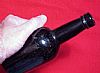
Dark Amber Ale Bottle
Click to Enlarge |
Many soldiers liked ale. It came in bottles like the one shown... Quite a few soldiers on both sides were court(quart)martialed for the excessive absorption of ale... some even while supposedly on duty! There were actually documented instances when officers did not show up for a battle due to thorough inebriation. They were quickly shown the insides of military prisons. But when on leave and visiting taverns and shanties, soldiers were allowed to drink a bit more ale than we might now consider wise. The trash pits of Union and Confederate military camps often contain such bottles from ale, whiskey and other mind-boggling spirits. Of course, a few other soldiers only drank vegatable juices and pure spring water...
Beautiful Civil War Period "Cathedral" Pickle Bottle
Click to Enlarge |
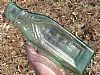
This is a "cathedral" pickle bottle from the 1840's through 1860's... It measures 9 in. tall & 2 1/4 in. across pontil base. Look at the workmanship and design on such a fine foodstuff bottle! Glass is aqua in color! Has a "graphite" style pontil on base.
Civil War Period Tin Plate
Click to Enlarge |
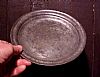
This is the type of basic tin plate that Civil War soldiers ate off of while in their varied Civil War field camps. While in "refreshment saloons of larger cities; training camps and larger military hospitals they may have had the luxury of stoneware or cheaper china plates, such items were overly fragile and heavy for campaign usage. These tin plates held up pretty well to daily usage. While they often got small usage dents and a little corrosion if left wet, the durabilty and weight were just right for huge armies on the fly. About 9" across. No maker's marks. Non-dug. Are often obtained for use in reenactment mess tent displays these days...
Tin Civil War Period Shaker
Click to Enlarge |
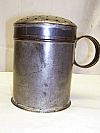
THIS IS A LARGE TIN SHAKER OR MUFFINER THAT MOST LIKELY WAS USED TO SHAKE OUT FLOUR OR POWDERED SPICES> IT IS A LARGE 5 1/2" TALL AND 3 7/8" ACROSS> IT CAME FROM THE COLLECTION OF AN OLD GENTLEMAN WHOSE GREAT GRANDFATHER AND GREAT UNCLES BROUGHT THEM BACK FROM THEIR SERVICE DURING THE U.S. CIVIL WAR.
Civil War Utensil Combination
Click to Enlarge |
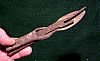
Combination fork & spoon sets were popular items taken to war in knapsacks by troopers due to their compact utility. This is an iron fork and spoon set that interlocks by way of fork sliding through an opening in the spoon handle. Part of one fork prong is missing. Otherwise is sturdy, intact and very interesting CW camp item. About 7" long. From an old collection.
Oysters Eaten by Union Soldiers at Maryland Heights
Click to Enlarge |
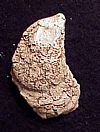
Oysters were a very popular food with Americans during mid-Nineteenth Century. Oyster shells are very often found in trash pits of CW camps, as was this one at a Union trash pit on Maryland Heights. Paper scrap with it said "Maryland Heights, Al Flickinger".
Large Pewter & glass Flask marked Leather Cover
Click to Enlarge |
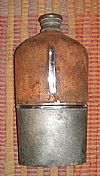
This is a large glass flask made by Olny in Philadelphia, with a pewter base cover and leather upper sleeve.
Marked on leather in old Ink H.W.B. with a street address. Cap intact. No breaks. Great to swig whiskey from between battles especially if impersonating General Grant. A big 9 inches high.
1862 Worman & Ely Combination Utensil Set
Click to Enlarge |
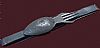
This is a combination knife, fork, spoon set, patented in 1862 by Worman & Ely. It was often carried by CW soldiers in their haversacks in order to chow-down easier in camps along the march.
|